Why Now?
Our shared lived reality:
Menstrual, Emotional and Mental Health
For years and generations, menstrual, emotional and mental health has been overlooked and its importance understated, creating a gap in the understanding and care of young menstruating people. This has affected not just young people but families, schools and whole communities globally.
A report released in May 2024 by UNICEF and WHO examines for the first time emerging national data on menstrual health and hygiene in schools across the globe with special emphasis on menstrual health.
Here are four out of the ten key facts highlighted in the report:
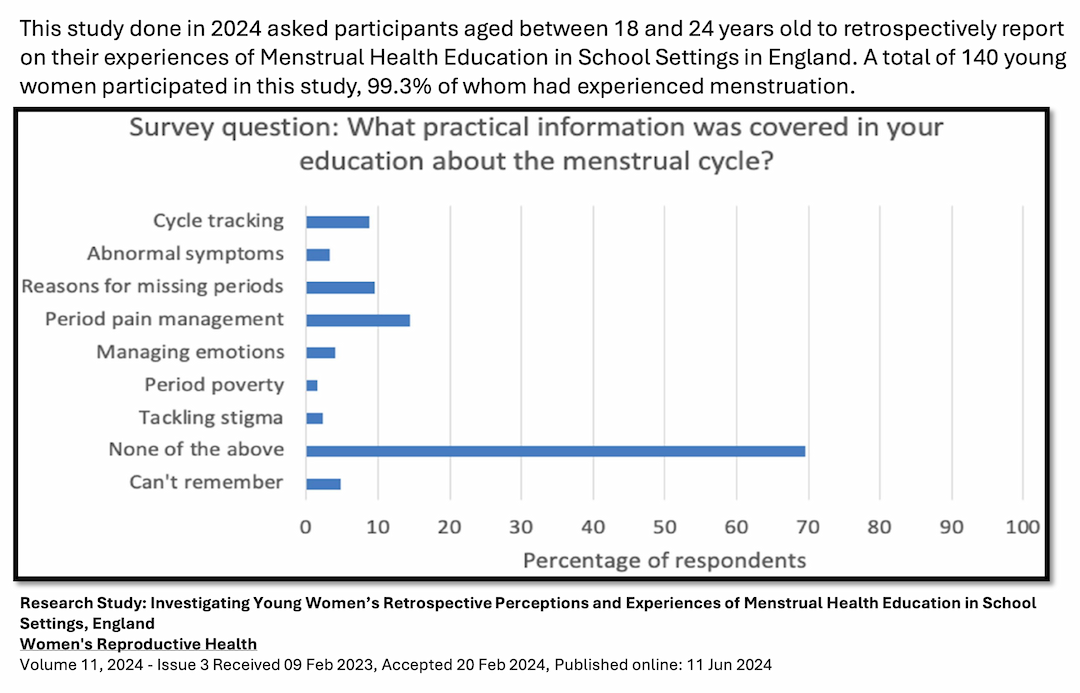
- Worldwide, only 2 out of 5 schools (39%) provide menstrual health education. Millions around the world are unaware or unprepared for menstruation before having their first period.
- Studies show that stigma related to menstruation remains widespread, with adolescents often feeling ashamed or unable to openly discuss the topic. This shame can affect their mental health and school attendance.
- No national datasets were identified on how many teachers are trained to teach about menstrual hygiene, indicating a significant gap in educational support. Without proper training, teachers are ill-equipped to address students' needs.
The report emphasizes the urgent need for worldwide action to advance menstrual health and hygiene in educational settings and that global efforts guarantee that every schoolgirl can manage her menstruation with dignity, safety and confidence.
Resource and further information on the report: https://www.who.int/news/item/28-05-2024-global-report-reveals-major-gaps-in-menstrual-health-and-hygiene-in-schools (NEW YORK, GENEVA, 28 May 2024)